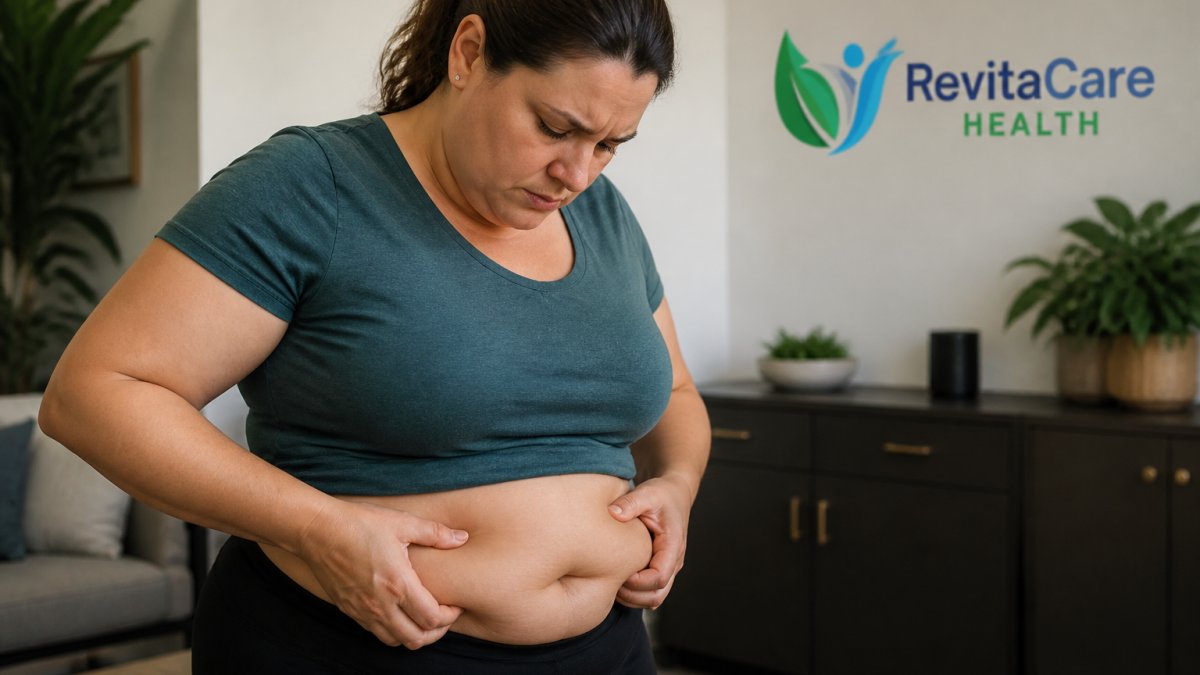
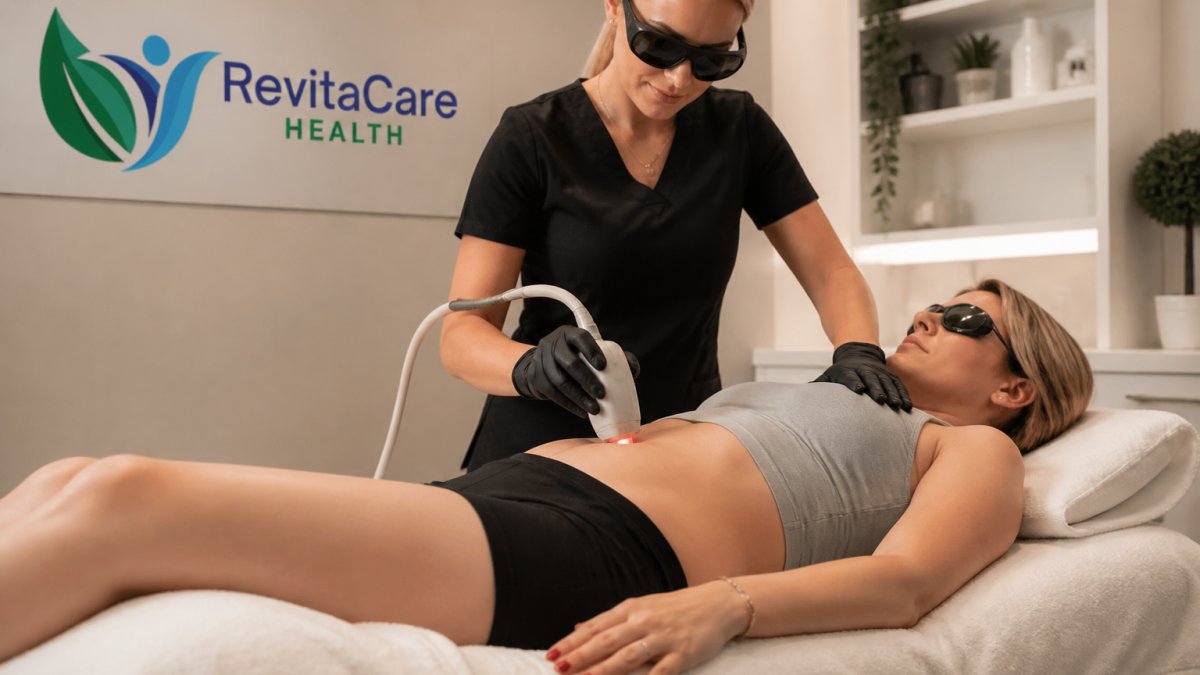
 comparison
Does Laser Fat Reduction Really Work? Evidence & Results
Table of Contents
- How Laser Fat Reduction Works
- Noninvasive Laser Fat Reduction Results: What the Research Shows
- Laser Fat Reduction vs. Laser Liposuction: Key Differences
- How Many Laser Lipo Sessions Are Needed for Visible Results
- Laser Fat Reduction Safety: Risks and Side Effects
- Who Is a Good Candidate for Laser Fat Reduction
- Realistic Expectations: Timeline and Long-Term Outcomes
- Frequently Asked Questions
Last Updated: October 14, 2026
How Laser Fat Reduction Works
Laser fat reduction uses focused light energy to target localized fat deposits beneath the skin. Low-level laser wavelengths penetrate the skin and interact with fat cells, causing them to release triglycerides.
The laser energy heats targeted tissue to a temperature that disrupts fat cell membranes without damaging surrounding skin or muscle, triggering the lymphatic system to clear the destroyed cells over the following weeks. The procedure is non-invasive: no incisions, anesthesia, or surgical intervention, and patients remain awake and comfortable throughout.
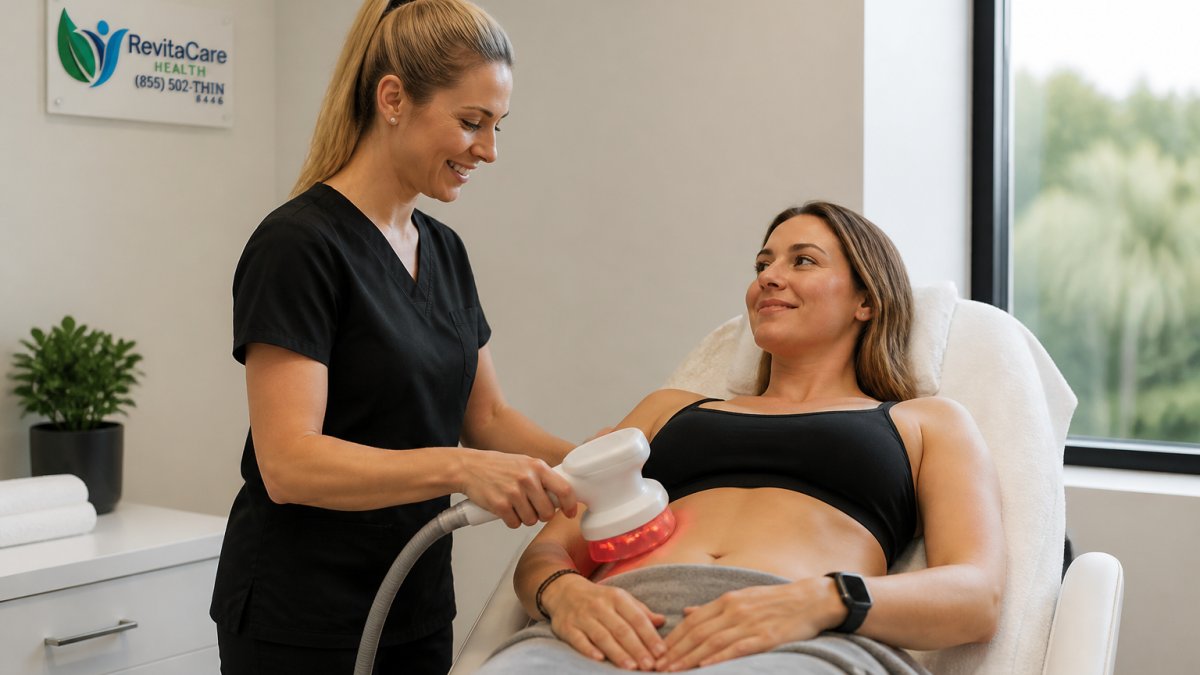
Different laser technologies operate at different wavelengths; some use red and near-infrared light calibrated to penetrate adipose tissue. The Invisa-RED laser technology used at RevitaCare Health delivers this energy to maximize fat cell disruption while minimizing discomfort and recovery time. Sessions typically last 20-40 minutes depending on the treatment area.
Noninvasive Laser Fat Reduction Results: What the Research Shows
What matters is how well laser fat reduction works, how that's measured, and how confident you should be in the evidence.
What the studies actually measure
Clinical research on low-level laser therapy for body contouring typically measures one or more of the following:
- Circumference change in the treated area (waist, hips, thighs), usually in inches or centimeters
- Photographic assessment by blinded evaluators comparing before-and-after images
- Ultrasound or caliper measurement of fat layer thickness
- Patient-reported satisfaction and perceived improvement
These are cosmetic endpoints, not health endpoints. No major study claims laser fat reduction treats obesity, improves metabolic markers, or reduces cardiovascular risk.
Evidence quality: what to know before you trust a claim
Published literature commonly shows small sample sizes, short follow-up periods (often 4-12 weeks), and inconsistent protocols, different wavelengths, session counts, and measurement methods, making direct comparison difficult.
At least one major health-information source notes that the overall evidence for non-invasive fat reduction is limited and results vary widely between individuals and devices, a reason to treat dramatic before-and-after photos with skepticism.
Realistic effect sizes
Most practitioners find a full course of non-invasive laser treatments produces modest but noticeable circumference reduction, described in inches rather than pounds, consistent with a mechanism that targets localized fat deposits, not overall body weight (ncbi.nlm.nih.gov).
Patients typically report:
- Smoother contours in the treated area
- Clothing fitting differently (often the first sign patients notice)
- Minimal or no change on the scale
Results develop over 8-12 weeks as the body processes released fat. Individual variation is significant; age, metabolism, skin elasticity, and fat volume in the target area all influence outcomes.
What the research does not support
- Laser fat reduction as a weight-loss method
- Treatment of obesity or large-volume fat removal
- Permanent prevention of fat regain in untreated areas
- Replacement for diet, exercise, or medical weight management
Understanding these limits is the difference between a patient satisfied with realistic contouring results and one who feels misled.
Laser Fat Reduction vs. Laser Liposuction: Key Differences
These two procedures are fundamentally different despite both using laser technology to target fat.
Noninvasive laser fat reduction (what RevitaCare Health offers) requires no incisions. Laser energy is delivered through the skin surface, fat cells release their contents, and the body eliminates the lipids naturally. Sessions are quick, typically 20-40 minutes, with no downtime and an immediate return to normal activities.
Laser-assisted liposuction (minimally invasive) uses small surgical incisions and laser energy to liquefy fat before suctioning it out. It requires local anesthesia, creates wounds that need healing, and carries surgical risks like infection or scarring. Recovery typically takes 1-2 weeks, with swelling and bruising common.
The key distinction: noninvasive laser fat reduction triggers the body's own fat-elimination process, while laser liposuction surgically removes fat.
RevitaCare Health specializes in the noninvasive approach, delivering effective fat reduction without surgery, anesthesia, or recovery time.
How Many Laser Lipo Sessions Are Needed for Visible Results
Most patients see initial visible results after 2-4 sessions, though timing varies with localized fat and individual metabolism.
A typical plan involves 6-8 sessions spaced 1-2 weeks apart, each targeting the same area, with cumulative treatments producing progressively better contouring. Some patients need fewer sessions; others benefit from additional treatments.
Sessions are brief, usually 20-40 minutes depending on area size. Many professionals choose laser fat reduction because there's no downtime; you can have a session during lunch and return to work immediately.
Results continue improving after your final session. As your body processes released fat over 8-12 weeks, contours become smoother and more refined, so the full effect of your treatment plan becomes increasingly apparent over time.
The number of sessions needed depends on your starting point, your goals, and how your body responds. A consultation with a RevitaCare Health specialist can establish a personalized treatment plan tailored to your specific needs and desired outcomes.
Laser Fat Reduction Safety: Risks and Side Effects
Noninvasive laser fat reduction has a strong safety profile compared to surgical alternatives, but "safe" doesn't mean "appropriate for everyone." Here's what can go wrong, who should not be treated, and what to ask before you commit.
Common side effects (and how long they last)
Most patients experience only mild, temporary effects:
- Redness or warmth in the treated area, usually fades within a few hours
- Mild swelling, typically resolves within 24-48 hours
- Tenderness, uncommon, resolves within a day or two
- Temporary numbness or tingling, rare, resolves within days
Serious complications are rare because the procedure creates no wounds, requires no anesthesia, and involves no suctioning or surgical trauma. Scarring is not a concern since the skin surface remains intact.
Contraindications: who should not be treated
A qualified provider will screen for the following before treatment. Some are permanent exclusions; others are temporary.
Absolute or strong contraindications:
- Pregnancy or breastfeeding
- Active skin infection, open wounds, or severe dermatitis in the treatment area
- Known photosensitivity disorders or active use of photosensitizing medications (certain antibiotics, retinoids, and some diuretics)
- Pacemakers or implanted electronic devices in or near the treatment area
- Active cancer or history of cancer in the treatment area
- Severe liver or kidney disease (the body must process and eliminate released fat)
Relative contraindications (require clinical judgment):
- Poorly controlled diabetes
- Autoimmune conditions affecting the skin
- Very loose or sagging skin (results will be limited without skin-tightening)
- Recent surgery or injury in the treatment area
- Use of blood-thinning medications (may increase bruising risk)
Regulatory status
Noninvasive laser fat reduction devices are regulated as medical devices and require clearance before marketing for body contouring (the FDA). "Cleared" means the device was reviewed for safety and intended use, not that every protocol or combination has been independently validated. Ask your provider which device they use and its cleared indications.
Questions to ask before treatment
Bring this list to your consultation:
- Which device will be used, and what is its regulatory clearance?
- How many treatments do you recommend for my specific area and goals?
- What results do you typically see in patients with my body type and skin quality?
- What are the signs of a complication I should watch for, and who do I contact if something goes wrong?
- Are there any medications or health conditions that would make me a poor candidate?
- What happens if I gain weight after treatment?
Safety depends on the provider
The technology itself is low-risk when used appropriately. What matters most are proper patient selection, correct device settings, and appropriate treatment intervals. A provider who rushes screening or promises dramatic results without discussing limitations is not practicing safely.
RevitaCare Health's approach emphasizes safety through personalized assessment, appropriate treatment parameters, and professional oversight throughout your sessions.
Who Is a Good Candidate for Laser Fat Reduction
The ideal candidate for laser fat reduction has localized fat deposits that haven't responded to diet and exercise, stubborn pockets in areas like the abdomen, flanks, thighs, or chin.
Good candidates typically:
- Have realistic expectations (this is body contouring, not weight loss)
- Are in generally good health with stable weight
- Have adequate skin elasticity for good contouring results
- Want to avoid surgery, anesthesia, and recovery downtime
- Are committed to maintaining results through healthy habits
Age matters less than skin quality and localized fat. Younger patients often see excellent results due to better skin elasticity; older adults can benefit too, though skin laxity may affect the final contour.
Laser fat reduction works best for people within or near their target weight range. If you're significantly overweight, a comprehensive weight-loss program may be more appropriate first. RevitaCare Health takes a holistic approach, combining laser fat reduction with personalized weight-loss programs.
Poor candidates include those with very loose or sagging skin (where skin tightening might be needed separately), active skin infections in the treatment area, or certain medical conditions. A consultation determines whether you're a good fit.
Realistic Expectations: Timeline and Long-Term Outcomes
Understanding the realistic timeline prevents disappointment and helps you appreciate the gradual improvements.
Immediate (during and right after treatment): You may feel mild warmth and slight redness. Most people experience no pain; treatments are described as comfortable and quick.
First week: Minimal swelling may appear, then resolves. No dramatic change yet is normal, the fat-elimination process is beginning at the cellular level.
Weeks 2-4: Subtle improvements may become noticeable and clothes may fit differently.
Weeks 4-8: More visible body contouring emerges, apparent to you and possibly others, when most people feel genuinely encouraged.
Weeks 8-12: Final results continue refining as your body completes the fat-elimination process. This extended timeline is why patience matters.
Long-term outcomes: Results are long-lasting because treated fat cells are eliminated, not merely shrunk. However, remaining fat cells can expand with significant weight gain.
If you gain 20-30 pounds after treatment, fat redistributes throughout your body, including treated areas.
RevitaCare Health's holistic approach combines laser fat reduction with personalized weight-loss programs to help you achieve and maintain results long-term.
Laser fat reduction delivers real, measurable body contouring results, but it's not a weight-loss solution or a substitute for healthy habits. It's a precision tool for stubborn localized fat that diet and exercise alone haven't resolved.
Frequently Asked Questions
Is laser fat reduction effective for stubborn fat that diet and exercise won't touch?
Clinical research shows that laser fat reduction can produce statistically significant cosmetic improvement in localized fat deposits. Studies using low-level laser therapy have demonstrated visible body contouring results after four weeks of treatment. However, laser fat reduction targets specific areas, it is not a weight-loss solution and works best on stubborn pockets of fat resistant to diet and exercise. Results depend on the number of sessions, treatment area, and individual response. A consultation with a qualified provider can help determine if your specific fat deposits are suitable for laser treatment.
How many laser lipo sessions are needed to see noticeable results?
The number of sessions varies based on the treatment area, amount of fat, and your body's response. Most treatment plans involve multiple sessions spaced over several weeks. According to clinical guidance, visible results may take up to three months to fully appear as the body processes treated fat cells. Your provider will recommend a personalized treatment plan during your consultation. Consistency with the recommended session schedule improves the likelihood of achieving your target results.
What is the difference between laser fat reduction and traditional liposuction?
Laser fat reduction is noninvasive and uses laser energy to target fat cells in specific areas, causing them to release triglycerides without destroying the cell itself. Traditional liposuction is a surgical procedure that physically removes fat cells through suction. Laser approaches typically require no downtime and carry lower infection risk, while traditional liposuction offers more dramatic fat removal but involves recovery time, scarring potential, and surgical risks. Your choice depends on the volume of fat, your target areas, and your tolerance for downtime.
What are the safety concerns with laser fat reduction?
Laser fat reduction is generally considered safe when performed by a qualified provider. Common temporary side effects include mild swelling, bruising, and minor discomfort. Serious complications like infection or significant scarring are rare. However, certain individuals, such as those with specific medical conditions, pregnancy, or taking certain medications, may not be suitable candidates. A thorough consultation with your provider will identify any contraindications and ensure the treatment is appropriate for your health profile.