 how-to
Book Your Non-Invasive Fat Loss Consultation
Table of Contents
- Why Book a Non-Invasive Fat Loss Consultation
- What to Expect at a Body Contouring Consultation
- Non-Surgical Fat Reduction Options You'll Discuss
- Questions to Ask About Fat Loss Treatments
- How to Prepare for Your Consultation
- Evaluating Your Consultation Results and Next Steps
- Frequently Asked Questions
Last Updated: October 9, 2026
Why Book a Non-Invasive Fat Loss Consultation
When diet and exercise alone haven't delivered the results you want, a non-invasive fat loss consultation can help you understand what's actually possible for your body. Many people struggle with stubborn fat deposits that resist traditional weight management efforts.
At RevitaCare Health, we help people explore body contouring options tailored to their goals.
The biggest value of booking a consultation is personalized guidance.
What to Expect at a Body Contouring Consultation
A body contouring consultation typically takes 45 to 60 minutes and follows a structured format designed to give you complete information.
Initial Assessment and Medical History
Your consultation begins with a detailed conversation about your health background.
Be honest about what you've already attempted, including other fat loss treatments, skin sensitivities, or healing concerns. The more the specialist knows, the better they can recommend an approach that fits your situation.
You'll also discuss your goals. Are you targeting your abdomen, flanks, thighs, arms, or chin? Do you want inch loss, weight reduction, or both? Clear goals help the specialist recommend the right treatment plan.
Body Analysis and Target Areas
Next comes a physical assessment of the areas you want to treat. The specialist examines your skin quality, fat distribution, and muscle tone, which informs which technologies will work best for you.
The specialist isn't judging, they're gathering information about skin thickness, fat density, and the contours you want to change, and may take measurements or photos to establish a baseline for tracking results.
This is your chance to ask about specific problem areas, including why certain spots respond differently to diet and exercise.
Treatment Plan and Timeline Discussion
Expect an honest conversation about what's achievable. Non-invasive treatments deliver real results but work gradually, most people see noticeable changes after several sessions, with continued improvement over weeks and months.
During this phase, ask about recovery time, temporary side effects, and how to prepare for your first session, plus any follow-up care or lifestyle adjustments that support your results.
Non-Surgical Fat Reduction Options You'll Discuss
Your consultation will cover the non-invasive fat loss technologies available. Different approaches work through different mechanisms, and the best choice depends on your target areas and goals.
Red Light Therapy for Fat Loss
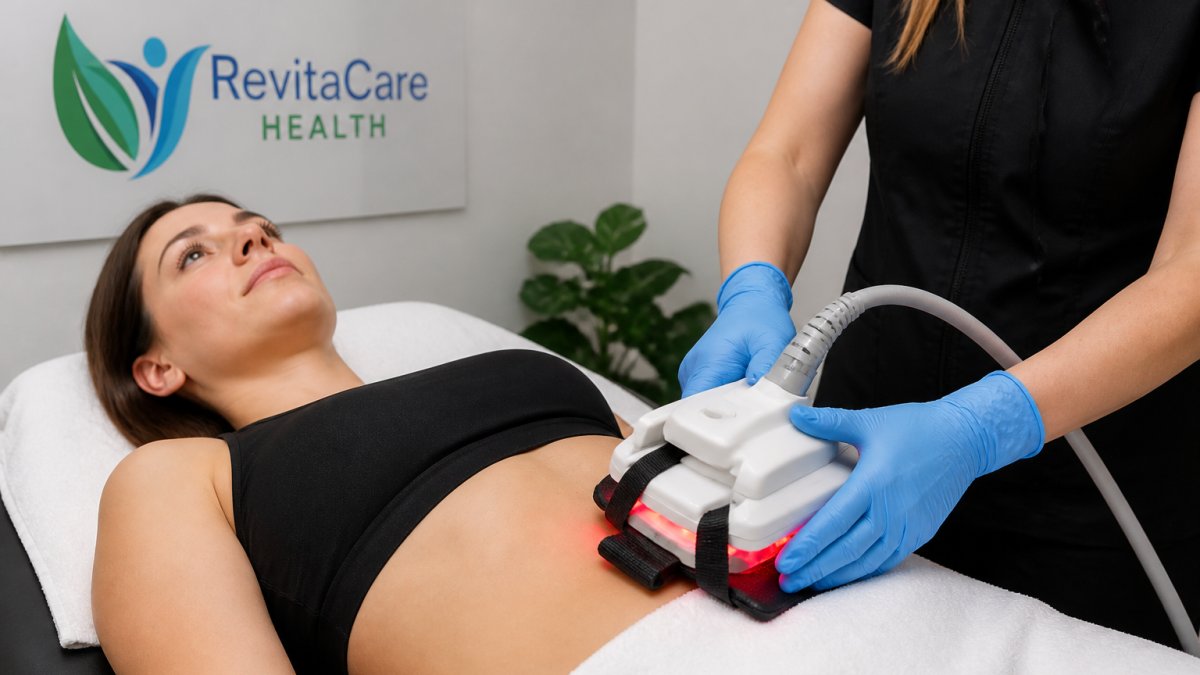
Red light therapy uses specific wavelengths of light to stimulate the body's natural fat reduction processes, penetrating the skin and triggering cellular activity that targets fat cells without damaging surrounding tissue.
Many people choose red light therapy because it's completely non-invasive. There's no downtime, no needles, and no surgical recovery.
RevitaCare Health specializes in invisa-RED laser treatments, a proven red light technology for fat reduction and inch loss. Patients often report that the process feels gentle and painless.
Red light therapy also supports broader wellness goals. Beyond fat reduction, many patients report improved energy levels and inflammation relief, a holistic benefit that aligns with a comprehensive approach to health.
Questions to Ask About Fat Loss Treatments
Going into your consultation prepared with good questions helps you get the most value from the appointment.
Ask how many sessions you'll likely need. Treatment frequency varies by technology and goals, but understanding the commitment upfront prevents surprises later.
Ask about the timeline for visible results.
Ask what happens if you don't see the results you want.
Ask about temporary side effects.
Ask how the specialist evaluates candidacy and what factors determine suitability.
Finally, ask about the specialist's experience with your target areas.
How to Prepare for Your Consultation
Most articles about non-invasive fat loss jump straight to the technology and skip the part you actually have to do first: find a qualified provider and get on the calendar. Here's a practical walkthrough.
Step 1: Find Providers Who Offer the Treatment You Want
Search for the specific technology rather than the generic category.
Cross-check two things on each provider's site: whether the device is listed by name, and who performs the treatment. Some clinics have a supervising physician but a trained technician running every session, not automatically a problem, but know which one you're getting before you book.
Step 2: Verify Credentials Before You Call
A few checks take under ten minutes and eliminate most of the risk:
- Confirm the practice is licensed in your state.
- Look for board certification if a physician performs or supervises your treatment.
- Check whether the provider has device-specific training. Manufacturers often list certified providers on their own websites.
- Read reviews for patterns, not individual complaints. Repeated mentions of rushed consultations or upsold packages matter more than one bad review.
Step 3: Request the Appointment
Most practices let you book three ways: an online scheduling form, a phone call, or a text/chat widget. Online forms are convenient but often route to a sales coordinator rather than a clinician. If your questions are medical rather than logistical, call and ask to speak with the person who will actually perform the assessment.
When you request the appointment, ask two questions up front:
- Is the consultation free, or is there a fee that gets applied to treatment if you book?
- Who will I meet with, a physician, a nurse, or a treatment coordinator?
Knowing the answer to both prevents the awkward surprise of a sales pitch when you expected a clinical evaluation.
Step 4: Prepare Your Information

Bring or have ready:
- A list of all medications and supplements, including dosages.
- Any relevant medical history: prior surgeries, current conditions, pregnancy status, or implanted medical devices.
- Photos of previous body contouring or weight loss results, if you have them, so the provider can see how your body has responded before.
- Your specific goals, stated in measurable terms. "Reduce my waist by 2 inches" gives the provider something to plan against; "tone up" does not.
Step 5: What to Wear and How Long to Block
Wear two-piece clothing or something that gives easy access to your target area, a fitted top and leggings work better than a dress or jumpsuit.
Block at least 90 minutes even if the consultation is scheduled for 45 to 60. Intake paperwork, the physical assessment, and question time routinely run long, and you don't want to cut the conversation short because of a parking meter.
Step 6: Bring a Decision Framework, Not Just Questions
Before you walk in, decide what would make you say yes and what would make you walk away. Common deal-breakers people set in advance:
- Pressure to book treatment the same day.
- No clear answer on how many sessions are needed.
- Refusal to put the treatment plan and pricing in writing.
- A provider who won't discuss what happens if results fall short.
Having these written down keeps the consultation a two-way evaluation instead of a one-way pitch.
Evaluating Your Consultation Results and Next Steps
A consultation produces information, not an obligation. The 48 hours after your appointment are when you turn that information into a decision. Here is a framework for doing it well.
Compare the Plan Against What You Asked For
Pull out the goals you wrote down before the appointment and check them against the proposed plan line by line. Did the provider address each target area you named? Did they explain why they recommended one technology over another for your specific body composition? If the plan skips an area you care about, ask why before you decide.
A useful test: can you explain the proposed treatment back to someone else in two sentences? If you can't, you don't yet understand it well enough to commit.
Understand the Full Cost Structure
Non-invasive fat reduction is priced in several different ways, and the structure matters as much as the number:
- Per session, you pay for each visit individually. Flexible, but the total adds up and there's no package discount.
- Per treatment area, pricing scales with how many zones you treat. Common for abdomen, flanks, thighs, arms, and chin.
- Per package, a bundled price for the full recommended course. Usually the lowest per-session rate, but you're committing upfront.
- Membership or financing, monthly payment plans through a third-party lender. Ask about the interest rate and total repayment amount, not just the monthly figure.
Also ask what happens if you need more sessions than predicted. Some practices honor the original package price; others charge per additional visit. Get the answer before you sign.
Evaluate the Provider, Not Just the Plan
Use these criteria to compare two or more consultations side by side:
| What to check | Strong answer | Weak answer |
|---|---|---|
| Device experience | Specific number of treatments performed | "We do a lot of these" |
| Candidacy assessment | Measured skin quality, fat depth, and goals | Quick visual glance |
| Realistic outcomes | Ranges with timelines and variables | Guaranteed inch loss |
| Risk discussion | Named side effects and how they're managed | "It's completely safe" |
| Follow-up | Scheduled check-in to measure progress | "Call us if you have questions" |
| Pricing | Written total for the full plan | Verbal per-session quote only |
If a provider can't answer the left column clearly, that's your answer.
Decide, Defer, or Get a Second Opinion
There are three legitimate outcomes to a consultation:
- Proceed, the plan matches your goals, the provider answered your questions, and the cost fits your budget.
- Defer, you're interested but the timing or budget isn't right. Ask whether the quoted pricing has an expiration date and whether you can re-consult later.
- Get a second opinion, the plan felt off, the provider was vague, or you want to compare technologies. This is normal and no reputable provider will penalize you for it.
If you're comparing two providers, ask each the same five questions so the answers line up:
- Which device will you use on me, and why that one?
- How many sessions, spaced how far apart?
- What results do you expect, and by when?
- What are the total costs, all in?
- What happens if I don't see results?
After You Decide
If you move forward, ask for the treatment schedule in writing before your first session. Confirm the cancellation policy, whether sessions can be rescheduled, and how progress will be tracked, measurements, photos, or both.
If you defer or choose another provider, keep your notes. A consultation isn't wasted if it sharpened your understanding of what you want and what a good provider looks like.
Frequently Asked Questions
What happens during a non-invasive fat loss consultation?
During a non-invasive fat loss consultation, your provider reviews your medical history, examines the areas where you want to reduce fat, and discusses your body goals. They'll explain available non-surgical fat reduction options, including how red light therapy and other treatments work, and create a personalized treatment plan with expected results and session timelines based on your specific needs and body type.
What should I ask before starting a non-invasive fat loss treatment?
Ask about the specific technology being used, how many sessions you'll need, realistic results for your body type, what to expect between sessions, any side effects or downtime, how the treatment targets stubborn fat areas like your abdomen or thighs, and what happens if you're not satisfied with results. Also clarify what's included in your treatment plan and confirm your provider's qualifications and experience with the specific procedure.
How should I prepare for a body contouring consultation?
Bring your medical history, list any medications or supplements you take, wear comfortable clothing that allows easy access to the areas you want treated, and bring photos of your body goals if you have them. Write down your specific concerns about stubborn fat pockets, questions you want answered, and your availability for treatment sessions. Arrive with realistic expectations about non-invasive fat reduction and an open mind about the options your provider recommends.
Can red light therapy help with fat loss?
Red light therapy uses specific wavelengths to stimulate fat cells and support body sculpting when combined with a treatment plan. During your consultation, your provider will explain how red light therapy works for non-invasive fat reduction in your target areas, whether it's suitable for your body type, and how many sessions typically deliver results. Results vary based on individual metabolism and adherence to the recommended treatment schedule.