 blog
blog
Fat Loss for Busy Professionals: A Practical Guide
Table of Contents
- Why Fat Loss Feels Impossible When You're Busy
- Short Workouts for Weight Loss That Fit Your Schedule
- Quick Healthy Meals for Weight Loss During the Workweek
- High-Protein Meal Prep for Weight Loss: Simple Systems That Work
- Building Sustainable Weight Loss Habits as a Professional
- When Diet and Exercise Alone Aren't Enough: Non-Invasive Options
- Creating Your Personal Fat Loss Plan
- Frequently Asked Questions
Last Updated: October 7, 2026
Why Fat Loss Feels Impossible When You're Busy
The biggest barrier to fat loss busy professionals face isn't willpower. It's time.
When you're juggling deadlines, meetings, and responsibilities, your body's needs get pushed to the back of the line. The result: stubborn fat accumulates and energy crashes.
The problem isn't that fat loss is hard. It's that conventional approaches demand too much from people with no margin left.
At RevitaCare Health, we work with busy professionals who've tried everything. Nothing stuck because their systems didn't fit their actual lives.
This guide covers time-efficient workouts, quick meal systems, and sustainable habits that don't require overhauling your life, plus what to do when diet and exercise alone hit a ceiling.
Short Workouts for Weight Loss That Fit Your Schedule
The ideal workout for fat loss for busy professionals isn't a two-hour gym session. It's focused, intense, and done in 20-30 minutes.
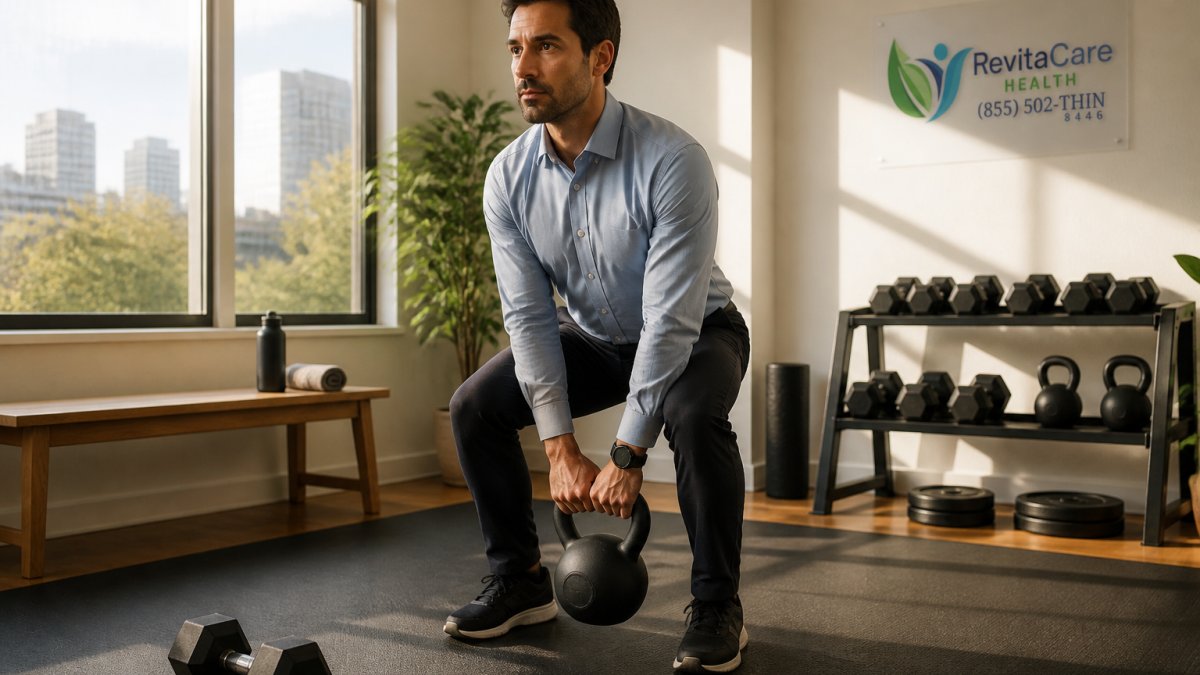
Short workouts work because they're built on intensity, not duration.
What makes short workouts effective for weight loss:
- They preserve muscle mass while burning fat
- They boost metabolism for hours after exercise ends
- They fit into lunch breaks or early mornings
- They require minimal equipment
Time-efficient workout formats that work:
Kettlebell circuits (20-25 minutes) Kettlebells deliver full-body strength training in compact sessions.
Resistance training with compound moves (25-30 minutes) Focus on movements that engage multiple muscle groups: squats, deadlifts, presses, rows.
HIIT protocols (15-20 minutes) Alternate between intense effort and recovery. Thirty seconds of maximum effort, thirty seconds rest. Repeat for 15 minutes.
Consistency beats perfection: a 20-minute workout you actually do beats a 60-minute plan you skip. Three focused sessions per week beat sporadic longer workouts.
Quick Healthy Meals for Weight Loss During the Workweek
Quick doesn't mean processed. It means strategic, and for most professionals, the hard part isn't cooking. It's the restaurant lunch, the takeout dinner, and the airport meal.
The core meal template
Every fast meal you assemble should hit four components:
- Protein, chicken, ground turkey, eggs, canned fish, Greek yogurt
- Carbohydrate, rice, sweet potato, oats, bread
- Vegetables, fresh or frozen, whatever's on hand
- Healthy fat, olive oil, nuts, avocado
This structure keeps you full, supports muscle retention, and stabilizes energy.
Fast assembly strategies for home
- Rotisserie chicken meals (5 minutes), pair with pre-cooked rice, bagged salad, olive oil.
- Egg-based breakfasts (3-5 minutes), scrambled eggs with toast and fruit.
- Canned fish bowls (5 minutes), tuna or salmon over rice with frozen vegetables.
- Frozen vegetable shortcuts, nutritionally equivalent to fresh, already cut, ready to heat.
- Batch-friendly proteins, cook ground turkey or chicken in bulk on Sunday, portion into containers.
Eating out without derailing the week
This is where most plans fall apart. A few defaults help:
Restaurant lunches
- Order a protein-forward entrée and ask for sauces and dressings on the side.
- Swap fries or chips for a side salad or vegetables when the option exists.
- Skip the bread basket or move it out of arm's reach.
- Drink water or unsweetened drinks instead of soda or sweet tea.
Takeout dinners
- Choose grilled or roasted proteins over fried when available.
- Ask for half the rice and double the vegetables on bowl-style orders.
- Keep a bagged salad or frozen vegetables at home to bulk out any takeout portion.
Client dinners and social meals
- Eat a protein-heavy snack before you go so you're not arriving ravenous.
- Pick one indulgence, the appetizer or the dessert, not both.
- Order a sparkling water or unsweetened drink between any alcoholic drinks.
Travel days
- Pack portable protein: jerky, nuts, protein bars, or a shaker with protein powder.
- At airports and gas stations, look for Greek yogurt, hard-boiled eggs, or pre-cut fruit.
- Hydrate aggressively, travel dehydration is often mistaken for hunger.
High-Protein Meal Prep for Weight Loss: Simple Systems That Work
High-protein meal prep for weight loss isn't complicated. It's systematic.
Protein preserves muscle during a calorie deficit, keeps you full longer, and requires more energy to digest (Checking your browser).
Why protein matters during fat loss:
- Preserves muscle while losing fat
- Increases satiety
- Supports recovery from resistance training
- Stabilizes blood sugar and energy
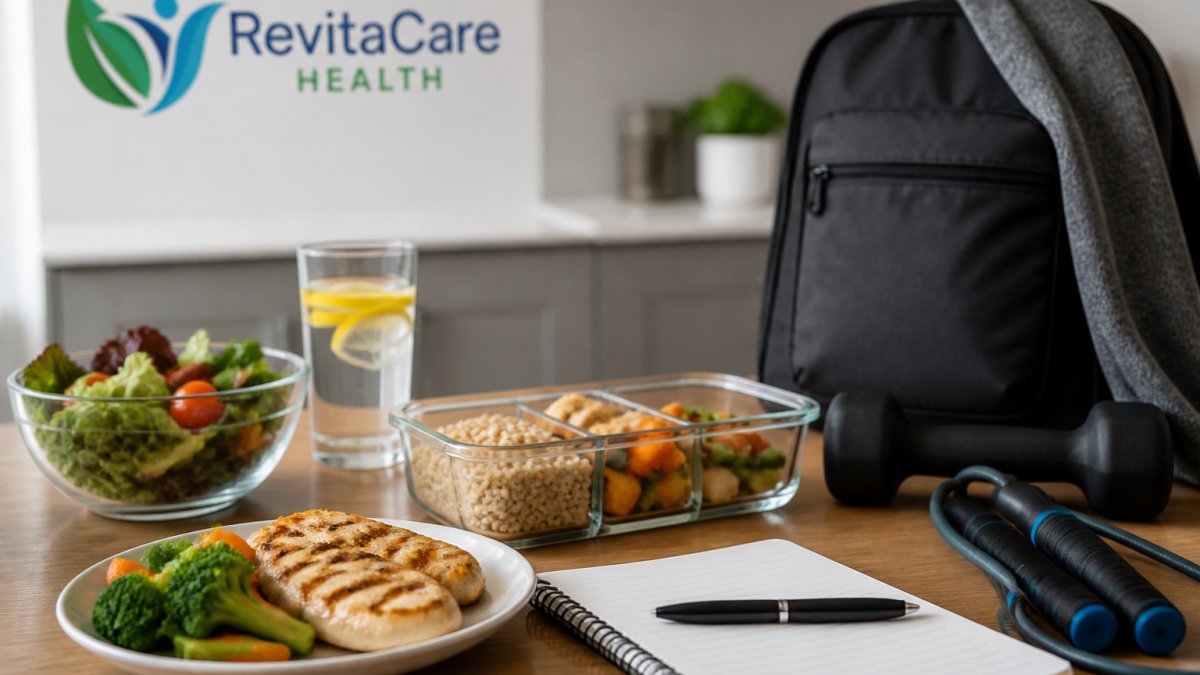
Simple high-protein meal prep system:
Step 2: Prepare carbohydrate bases (Sunday, 15 minutes) Cook a batch of rice, sweet potatoes, or oats. Portion into containers.
Step 3: Add vegetables (Sunday, 10 minutes) Roast vegetables or use frozen options.
Step 4: Assemble containers (Sunday, 10 minutes) Combine protein + carb + vegetable + fat source. Label with date.
| Protein Source | Carb Base | Vegetable | Prep Time |
|---|---|---|---|
| Ground turkey | Rice | Broccoli | 35 min total |
| Chicken breast | Sweet potato | Asparagus | 35 min total |
| Eggs | Oats | Spinach | 20 min total |
| Greek yogurt | Granola | Berries | 5 min total |
This system removes decision-making. You're not deciding what to eat each day, you're executing a plan. That's where consistency comes from.
Building Sustainable Weight Loss Habits as a Professional
Sustainable weight loss habits as a professional aren't built on motivation. They're built on systems, and the most useful system is a weekly calendar you can actually keep.
Motivation fades; systems persist. Professionals who maintain fat loss long-term aren't more disciplined, they've designed their week so the right choice is the default.
A realistic weekly template for a professional schedule
This is a pattern that fits most Monday-through-Friday workweeks. Adjust the days, not the structure.
| Day | Training (20-30 min) | Meals | Recovery |
|---|---|---|---|
| Monday | Kettlebell circuit | Prepped containers all day | 7-8 hrs sleep |
| Tuesday | Brisk walk or mobility | Prepped containers + one restaurant lunch | 10-min wind-down |
| Wednesday | Resistance training (compound lifts) | Prepped containers all day | 7-8 hrs sleep |
| Thursday | HIIT (15-20 min) | Prepped containers + takeout dinner | 10-min wind-down |
| Friday | Optional walk or rest | Prepped containers, flexible dinner | 7-8 hrs sleep |
| Saturday | Longer session (40-45 min) or hobby activity | One planned flexible meal | Full rest day from screens |
| Sunday | Rest | Batch-cook proteins and carbs (35-45 min) | Plan the week |
Three focused sessions plus two light days is realistic for most professionals. The Sunday batch-cook block makes the rest of the week work.
Realistic fat-loss timelines
A sustainable rate is roughly 0.5 to 1 percent of body weight per week, about 1 to 2 pounds for a 200-pound professional, not the 5-pound drops marketed online, which usually reflect water loss.
A common pattern looks like this:
- Weeks 1-2: Faster initial drop (often water and glycogen), then it slows.
- Weeks 3-8: Steady 0.5-1 percent per week if calories and protein are consistent.
- Weeks 8-12: Progress often stalls for 1-3 weeks, this is normal, not failure.
- Beyond 12 weeks: Reassess and adjust one variable at a time.
How to measure progress beyond the scale
The scale is one data point, not the whole picture. Track at least two of these:
- Waist and hip measurements, taken at the same spot, same time of day, once a week.
- Progress photos, same lighting, same pose, every two weeks.
- How clothes fit, a specific pair of pants is a surprisingly honest gauge.
- Energy and sleep quality, a 1-5 daily rating takes ten seconds.
- Strength benchmarks, reps or weight on a core lift.
What to do when progress plateaus
A plateau after 3 weeks is the signal to adjust, not quit. Change one variable at a time:
- Tighten portions slightly rather than overhauling the diet.
- Add one training session or increase intensity on an existing one.
- Raise protein if you suspect you're undershooting.
- Check sleep and stress, both affect appetite and recovery more than most people expect.
Common habit mistakes professionals make
- Starting too ambitious and burning out within weeks
- Changing diet and exercise simultaneously (too much at once)
- Relying on willpower instead of a calendar and prepped food
- Skipping accountability (tracking or check-ins)
- Not adjusting when progress plateaus
The fat loss busy professionals achieve comes from building one habit at a time, tracking progress beyond the scale, and adjusting when the data says to, not when motivation dips.
When Diet and Exercise Alone Aren't Enough: Non-Invasive Options
Some professionals do everything right and still hit a plateau. That's biology: metabolism changes with age, hormones shift, and stubborn fat deposits resist diet and exercise alone. Non-invasive treatment options can accelerate results without surgery or downtime.
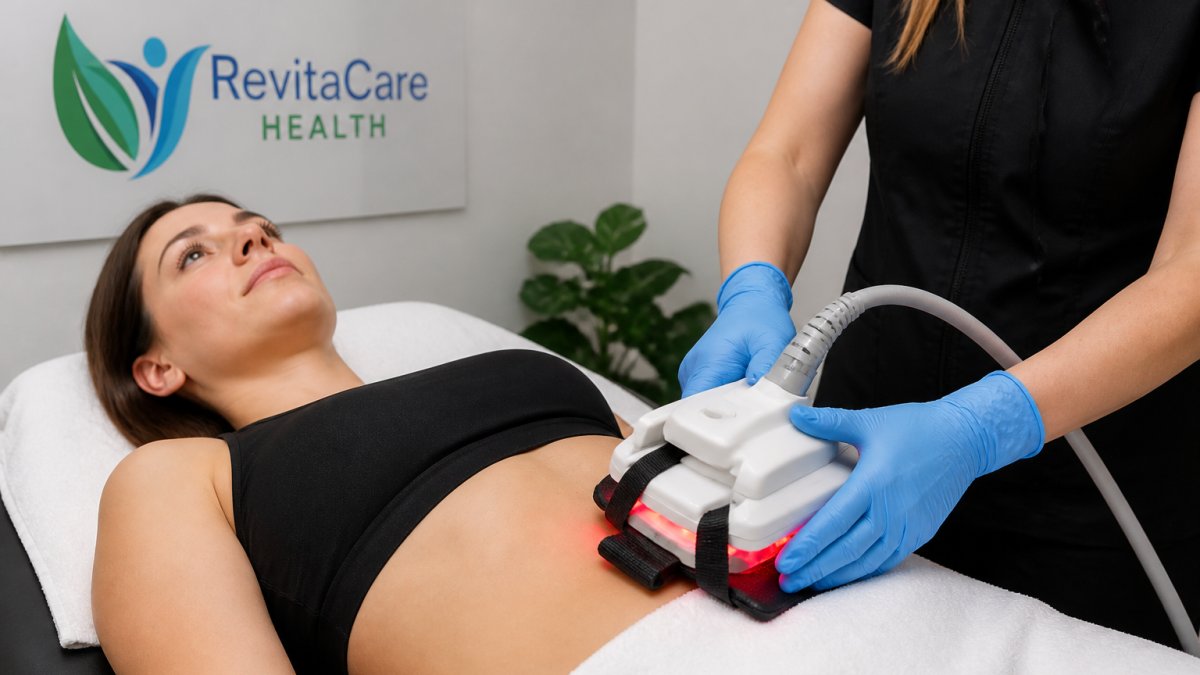
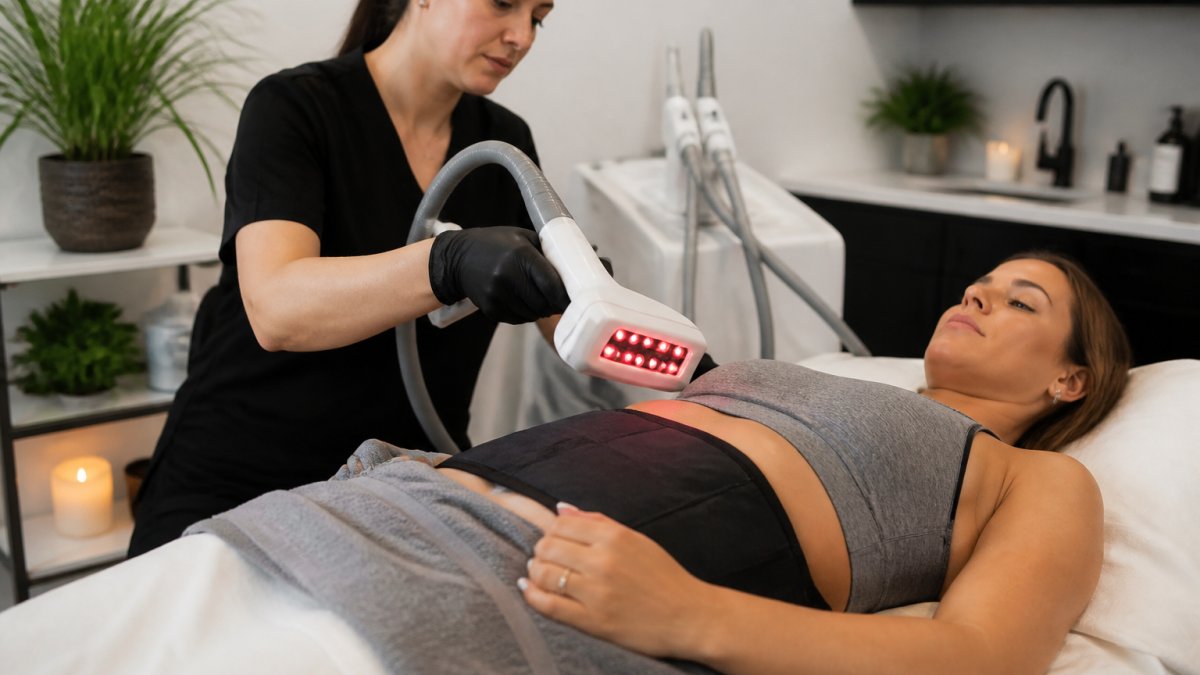
Non-invasive fat reduction targets fat cells directly, complementing your nutrition and fitness work. RevitaCare Health offers invisa-RED laser treatments for professionals who've maximized diet and exercise but want additional support.
How non-invasive fat reduction works:
- Targets stubborn fat deposits resistant to diet and exercise
- Non-surgical (no incisions, no anesthesia)
- No downtime (return to work immediately)
- Supports fat loss for busy professionals when other methods plateau
- Complements your existing nutrition and fitness work
When to consider non-invasive options:
- You've maintained consistent diet and exercise for 3+ months with minimal fat loss
- You have specific problem areas (lower belly, thighs, flanks) that won't budge
- You want to accelerate results without surgery
- You need a treatment that fits your professional schedule
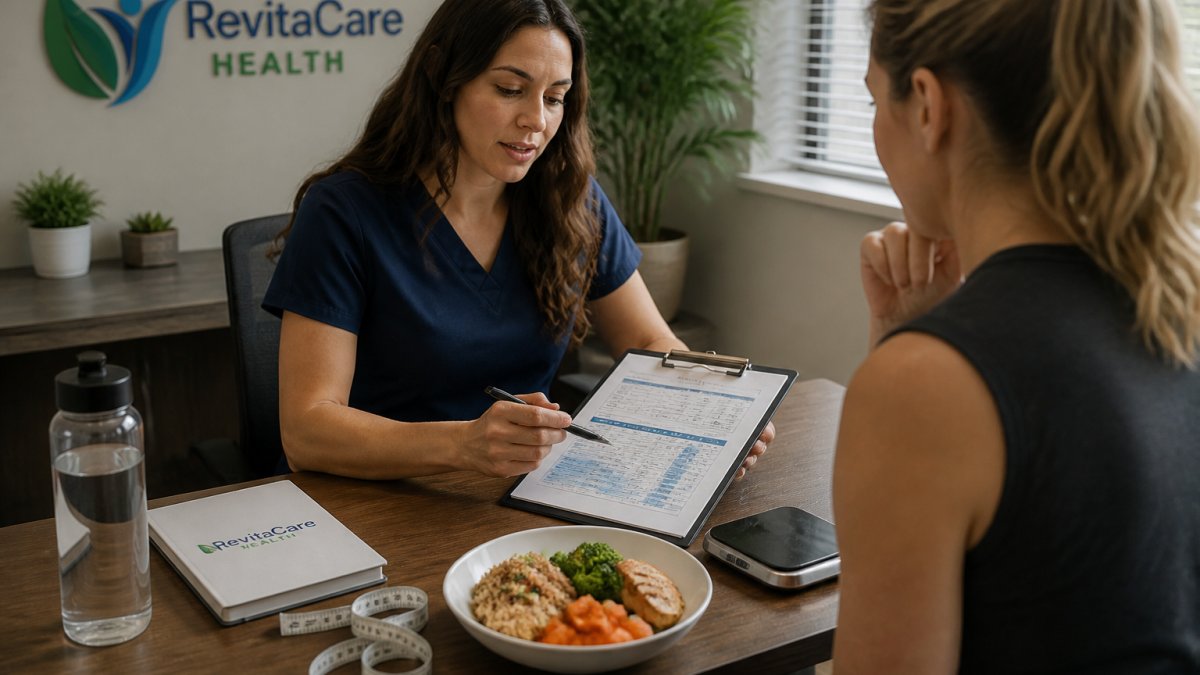
RevitaCare Health combines personalized weight loss programs with non-invasive treatments tailored to your needs. The invisa-RED laser delivers clinically proven fat reduction and inch loss without surgery's recovery time.
Creating Your Personal Fat Loss Plan
A generic plan fails because it ignores your reality. Your plan needs to reflect your schedule, preferences, and current situation.
Your fat loss plan should include:
- Realistic workout frequency (not aspirational, what you'll actually do)
- Meal system you'll stick with (not the "healthiest" option, the one you'll maintain)
- Protein target (specific grams per day, not vague "eat more protein")
- Tracking method (weight, measurements, progress photos, energy levels)
- Adjustment triggers (when to modify if progress stalls)
Building your plan:
Week 1: Assess baseline Track your current routine. How many workouts do you actually do? What do you typically eat? How much sleep do you get?
Week 2-3: Add one change Choose one adjustment: add three workouts per week, or implement meal prep, or increase protein.
Week 4+: Track and adjust Measure progress weekly. If moving forward, maintain.
The professionals who succeed aren't following a perfect plan. They're following a plan that works for their life. That's what creates sustainable fat loss for busy professionals.
Fat loss for busy professionals isn't about finding more time. When diet and exercise plateau, RevitaCare Health's personalized weight loss programs and invisa-RED laser treatments offer clinically proven support designed specifically for your schedule and goals.
Frequently Asked Questions
How much time do I actually need to spend exercising to lose fat as a busy professional?
You don't need hours. Research shows that 20-30 minutes of resistance training or high-intensity interval training three to four times per week can produce meaningful fat loss results, especially when combined with consistent nutrition. The key is consistency over duration. Many busy professionals see progress with just 30 minutes before work or during lunch breaks, focusing on compound movements like kettlebell exercises that work multiple muscle groups at once.
What's the best high-protein meal prep for weight loss when I travel for work?
Prepare portable, shelf-stable options like hard-boiled eggs, Greek yogurt cups, nuts, jerky, and canned tuna or salmon. Before traveling, research restaurants near your hotel or meetings that offer grilled proteins and vegetables. Pack protein powder for quick shakes in your hotel room. The goal is hitting your daily protein target (typically 0.8-1 gram per pound of body weight) without relying on convenience foods high in added sugars and sodium. Consistency with protein intake helps preserve muscle while losing fat.
I've tried diet and exercise for years with stubborn fat that won't budge. What makes non-invasive laser treatment different?
Non-invasive laser treatments like invisa-RED target localized fat deposits that resist diet and exercise, particularly in areas like the belly, thighs, and flanks. Unlike general weight loss, which affects your whole body, these treatments use light energy to reduce fat cells in specific problem areas. Many professionals find this approach valuable when combined with their existing fitness routine, as it addresses stubborn pockets while they maintain overall health. Results typically appear within a few sessions, with no downtime required.
How do I know if I'm a good candidate for fat loss treatment, and what should I expect?
A consultation with a qualified professional is essential to assess your individual needs, current health status, and realistic expectations. During this discussion, you'll learn about your specific situation, whether treatment options are appropriate for you, and what results others with similar concerns have experienced. Expect an honest conversation about timelines, the number of sessions typically needed, and how treatment works best alongside your existing habits. This personalized approach ensures you understand what's possible for your body type and circumstances.