 blog
blog
Before and After Laser Fat Reduction: Real Results
Table of Contents
- What Laser Fat Reduction Actually Does
- How Laser Fat Reduction Works: The Process
- How Many Laser Lipo Sessions for Best Results
- Non-Invasive Body Contouring Results: Timeline and Expectations
- Side Effects and Recovery Reality
- Maintaining Weight Loss After Laser Treatments
- Is Laser Fat Reduction Right for You?
- Frequently Asked Questions
Last Updated: October 4, 2026
What Laser Fat Reduction Actually Does
Laser fat reduction is a non-invasive body contouring treatment that uses thermal energy to disrupt fat cells without surgery. Unlike diet and exercise, which require months of effort with uncertain results on stubborn deposits, laser treatments target specific problem areas directly. The procedure works by heating subcutaneous fat beneath the skin's surface, triggering a process where fat cells break down and are naturally eliminated by your body over time.
At RevitaCare Health, laser fat reduction addresses stubborn fat that diet and exercise may not budge. The treatment is pain-free, requires no downtime, and delivers visible results.
The key difference from other approaches: laser fat reduction doesn't require you to lose weight first. It targets the fat cells themselves, not your overall body composition. This makes it ideal for people who are already at a healthy weight but have isolated pockets of stubborn fat resistant to traditional methods.
How Laser Fat Reduction Works: The Process
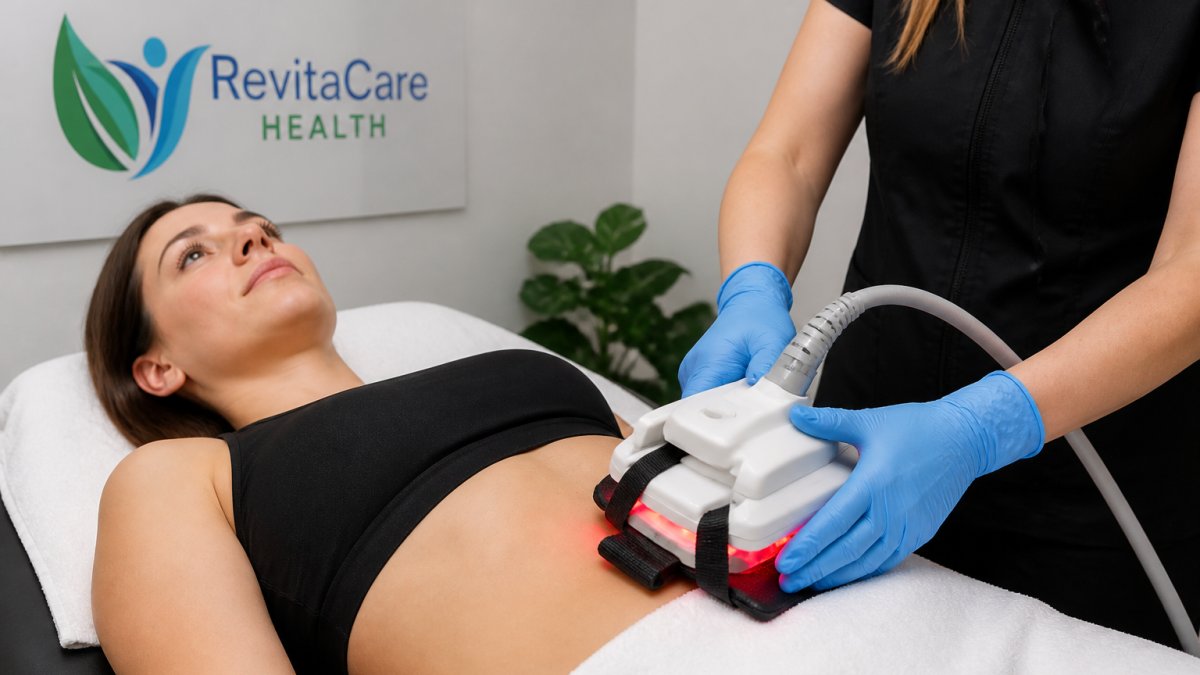
The procedure begins with a consultation to map your treatment areas. A trained technician applies the laser device directly to your skin over the target zone. The device emits low-level laser energy that penetrates the skin and heats the fat layer beneath.
Here's what happens at the cellular level:
- Thermal energy causes fat cell membranes to rupture
- Your body's natural lymphatic system removes the damaged fat cells
- The process is gradual, not immediate
- Surrounding tissue remains unharmed because the laser targets fat specifically
The entire session typically lasts 20-30 minutes. You feel warmth but no pain. Most people describe it as comfortable and relaxing. After treatment, you can return to normal activities immediately, no recovery period required.
RevitaCare Health uses Invisa-RED laser technology, which delivers precise thermal energy to adipose tissue while protecting the skin above. The laser penetrates to the depth where stubborn fat sits, ensuring fat cell disruption without damaging surrounding structures.
How Many Laser Lipo Sessions for Best Results
Most people need between 6 and 12 sessions to see optimal results, spaced one to two weeks apart. The exact number depends on your goals, the size of the treatment area, and how your body responds to the therapy.
Think of it like this: one session creates initial fat cell damage. Your body begins removing those cells. A second session damages more cells. By session six, you've had enough cumulative damage that visible changes emerge. Sessions 7-12 refine the results and target remaining stubborn deposits.
Session frequency matters:
- Too close together (less than one week): Your body hasn't finished processing the previous treatment
- Ideal spacing (7-14 days): Allows maximum fat cell elimination between treatments
- Too far apart (more than three weeks): Loses the cumulative momentum
RevitaCare Health creates personalized treatment plans based on your specific goals. The key is consistency, showing up for scheduled appointments so your body can complete the elimination cycle.
Non-Invasive Body Contouring Results: Timeline and Expectations
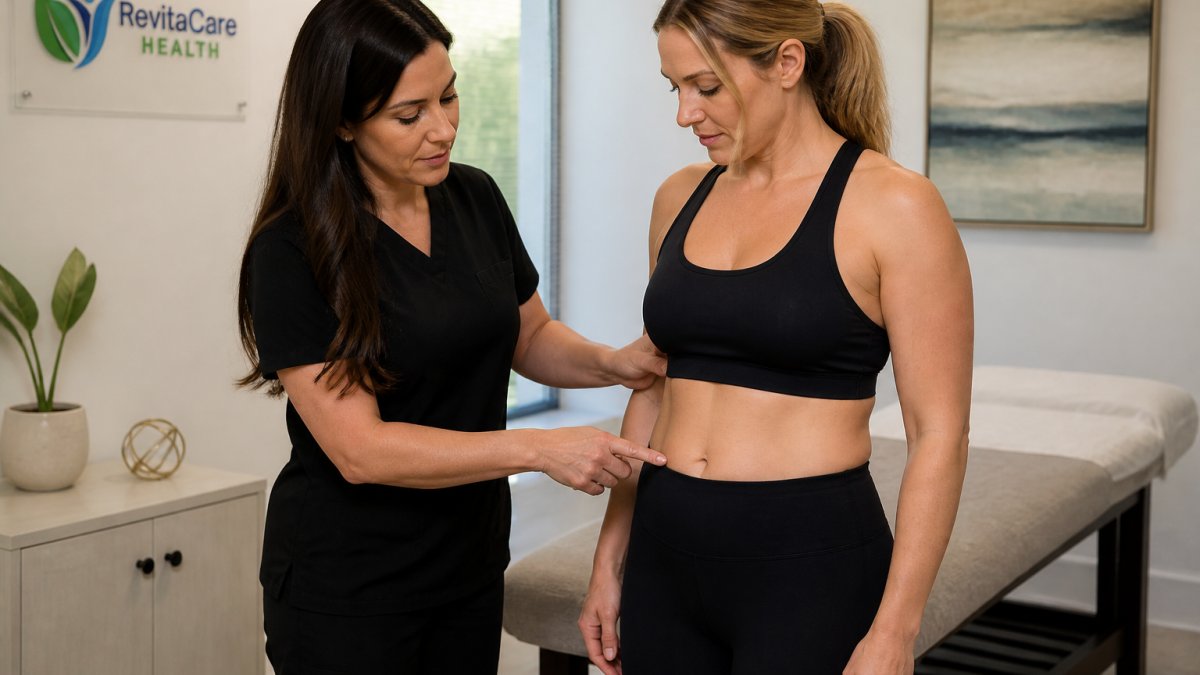
Results from laser fat reduction appear gradually. This isn't a procedure where you wake up transformed. Instead, you notice changes over weeks as your body eliminates damaged fat cells.
Week 1-2 after first treatment: Minimal visible change. Your body is processing the initial damage.
Week 3-4: Clothes fit slightly differently. You notice the treated area feels firmer.
Week 6-8 (after 4-6 sessions): Visible reduction in the treated area. Inches lost become noticeable to others.
Week 12+ (after full treatment course): Maximum results. The final contour takes shape as your body completes the elimination process.
The timeline varies based on several factors:
- How efficiently your lymphatic system processes waste
- The size of the treatment area
- Your overall health and metabolism
- How closely you follow post-treatment care
One critical point: laser fat reduction is not weight loss. You won't see the scale drop dramatically. Instead, you'll lose inches in the treated area while your overall weight stays relatively stable.
RevitaCare Health clients often report that their clothes fit better within 4-6 weeks, even though the scale barely moved.
Side Effects and Recovery Reality
Laser fat reduction has minimal side effects compared to surgical alternatives. However, understanding how it compares to other non-invasive technologies helps you make an informed choice.
Common mild effects from laser treatment (usually resolve within 24-48 hours):
- Slight redness at the treatment site
- Mild tenderness or warmth
- Temporary swelling
- Slight bruising (rare)
What you should avoid after laser treatment:
- Intense exercise for 24 hours (light walking is fine)
- Hot baths or saunas for 48 hours
- Direct sun exposure on treated areas
- Tight clothing over the treatment zone
The reason side effects are minimal: the laser targets only fat cells. Your skin remains intact. Your muscles aren't affected. There are no incisions, no stitches, no surgical trauma. Your body simply processes damaged fat cells through its normal waste elimination systems.
How laser compares to other non-surgical fat reduction methods:
Laser vs. Cryolipolysis (CoolSculpting): Cryolipolysis freezes fat cells, triggering apoptosis over 8-12 weeks. It requires fewer sessions (often 1-3 per area) but each session lasts 35-60 minutes and can cause temporary numbness, tingling, or paradoxical adipose hyperplasia (rare but serious fat growth in treated areas). Laser requires more sessions but shorter treatment times (20-30 minutes).
Laser vs. Ultrasound (Ultraformer, Liposonix): Ultrasound uses focused sound waves to disrupt fat cells (the American Academy of Dermatology). Sessions are typically longer (45-90 minutes) and can cause more significant post-treatment discomfort, including bruising and tenderness lasting several days. Some patients report pain during treatment. Laser is generally more comfortable during the procedure and causes less post-treatment soreness.
Laser vs. Radiofrequency (Thermage, Exilis): Radiofrequency heats deeper tissue layers and is often marketed for skin tightening alongside fat reduction. Sessions are longer (30-60 minutes) and can cause temporary skin irritation. Laser is faster and causes fewer skin reactions.
Why side effect profile matters for your choice: If you have a low pain tolerance or cannot tolerate bruising, laser is typically a gentle option. If you want fewer sessions and can tolerate longer appointment times, cryolipolysis may appeal. If skin tightening is your primary concern alongside fat reduction, radiofrequency or ultrasound may be worth considering.
Some clients worry about loose skin after fat reduction. In most cases, your skin naturally firms up alongside the fat reduction. If you have significant loose skin before treatment, discuss combination approaches (laser plus radiofrequency or skin-tightening procedures) with your provider during consultation.
Maintaining Weight Loss After Laser Treatments
Laser fat reduction isn't a permanent solution if you gain weight afterward. The treated fat cells are gone, but your body can still create new fat cells if you consume excess calories.
Here's the realistic picture: the fat cells destroyed by laser treatment do not return. However, remaining fat cells can expand if you gain weight. To maintain your results long-term, you need a sustainable approach to eating and activity.
What successful clients do:
- Return to normal eating habits (not restrictive dieting)
- Maintain regular physical activity (3-4 times weekly)
- Stay hydrated and get adequate sleep
- Avoid dramatic weight gain cycles
The advantage over traditional weight loss: you've permanently removed fat cells from your problem areas. If you gain 10 pounds after treatment, that weight distributes across your entire body, not back to your belly or thighs where you had the laser work done.
RevitaCare Health emphasizes that laser fat reduction works best alongside healthy lifestyle habits. The treatment removes stubborn fat that diet and exercise couldn't touch. Your job is to maintain the results through reasonable eating and activity choices.
Is Laser Fat Reduction Right for You?
Laser fat reduction works best for people with specific characteristics. Understanding whether you're a good candidate prevents wasted time and money on a treatment that won't deliver results for your situation.
Physical candidacy:
You're a good candidate if:
- You have stubborn fat pockets that don't respond to diet and exercise
- You're at or near your goal weight (the treatment isn't for overall weight loss)
- You have realistic expectations (gradual results, not instant transformation)
- You can commit to 6-12 sessions over 3-4 months
- You're willing to maintain results through healthy habits
- You want to avoid surgery and downtime
- Your skin has reasonable elasticity (not severely sagging)
Laser fat reduction may not be right if:
- You need to lose significant overall weight (50+ pounds)
- You have very loose or sagging skin (you may need skin tightening first)
- You're unwilling to commit to multiple sessions
- You expect permanent results without any lifestyle maintenance
- You have certain medical conditions (discuss with your provider)
Financial considerations:
Cost is a major factor in candidacy. Laser fat reduction requires multiple sessions, and total investment varies significantly based on treatment area size and your provider's pricing model. Budget for the full treatment course (6-12 sessions) rather than trying single sessions.
Compare total cost across providers carefully. Ask specifically: "What is the total cost for a complete treatment course for my area?" and "What happens if I need more sessions than expected?" Some providers offer package discounts for committing to 8-12 sessions upfront.
Psychological readiness:
This is often overlooked but critical. Laser fat reduction works best when your expectations are grounded in reality, not in comparison to heavily edited before-and-after photos or celebrity transformations.
Red flags that you may not be ready:
- You're pursuing treatment because someone else suggested it, not because you genuinely want it
- You believe the treatment will fix deeper body image concerns or relationship problems
- You're comparing yourself to heavily filtered social media images
- You expect results to happen overnight or after one session
- You're in an acute mental health crisis (depression, anxiety, eating disorder recovery)
Laser fat reduction is a tool for refining your body composition when you're already in a healthy place mentally and physically. It's not a solution for body dysmorphia or severe dissatisfaction with your appearance.
The honest truth:
Laser fat reduction is not a substitute for weight loss. If you're significantly overweight, you'll see better results from overall weight management first, then laser treatments to refine stubborn areas afterward.
RevitaCare Health evaluates each client individually during a consultation. We listen to your specific concerns and determine whether laser fat reduction addresses your actual problem or whether a different approach makes more sense. Some clients benefit most from combining laser treatments with our personalized weight loss programs for comprehensive results.
Frequently Asked Questions
Does laser fat reduction actually work?
Laser fat reduction works by using thermal energy to disrupt adipose tissue and trigger fat cell apoptosis. Clinical studies show measurable fat reduction and skin tightening in treated areas. Results vary based on individual metabolism, the number of sessions completed, and post-treatment lifestyle. Most patients see visible changes within 4-6 weeks, with continued improvement over 12 weeks. Success depends on realistic expectations: the procedure targets stubborn fat deposits resistant to diet and exercise, not dramatic weight loss.
How many sessions are needed to see before and after changes?
Most patients require 6-12 sessions spaced 1-2 weeks apart for optimal results. Some see modest changes after 3-4 sessions, but the most noticeable before and after transformations typically emerge after 8-10 sessions. The exact number depends on the treatment area size, the amount of subcutaneous fat, and individual response to the laser. Your provider will recommend a personalized session plan during your consultation based on your specific goals and body composition.
How long do laser fat reduction results last?
Laser fat reduction results are long-lasting because the procedure destroys fat cells through apoptosis. Those cells do not regenerate. However, remaining fat cells can expand if you gain weight, and new fat can accumulate in untreated areas. Maintaining your current weight through balanced nutrition and regular activity preserves the results indefinitely. Many patients maintain their before and after improvements for years by avoiding significant weight gain after treatment concludes.
What are the common side effects of laser fat reduction?
Most patients experience minimal side effects. Temporary bruising, mild swelling, and slight redness at the treatment site are common and resolve within days to a week. Unlike surgical liposuction, laser fat reduction is minimally invasive.