 how-to
Natural Ways to Reduce Inflammation: A 2026 Guide
Table of Contents
- Understanding Acute vs. Chronic Inflammation
- Anti-Inflammatory Foods That Work
- Anti-Inflammatory Herbs and Spices to Use Daily
- Anti-Inflammatory Lifestyle Habits That Matter
- Supplements for Inflammation: What Works and What to Know
- Foods and Ingredients to Limit
- How to Measure and Monitor Inflammation Progress
- Building Your Personal Anti-Inflammatory Plan
- Frequently Asked Questions
Last Updated: October 18, 2026
Understanding Acute vs. Chronic Inflammation
Inflammation is your body's natural response to injury or infection. Acute inflammation is short-term and necessary.
Chronic inflammation is different: a low-level response that lingers for weeks, months, or years instead of resolving.
The difference matters because how you address each type varies. At RevitaCare Health, we see many clients whose chronic inflammation diet and exercise alone haven't fully resolved.
Most people benefit from natural approaches that reduce inflammation at its source: food choices, daily movement, and stress relief.
Anti-Inflammatory Foods That Work
What you eat directly affects inflammation levels. Certain foods calm inflammatory responses; others fuel inflammation and should be limited.
Fruits and vegetables rich in antioxidants
Colorful produce is your first line of defense: berries, leafy greens, and bright vegetables contain antioxidants that protect cells from inflammatory damage.
Focus on these anti-inflammatory foods:
- Blueberries and raspberries
- Spinach, kale, and other dark leafy greens
- Broccoli and Brussels sprouts
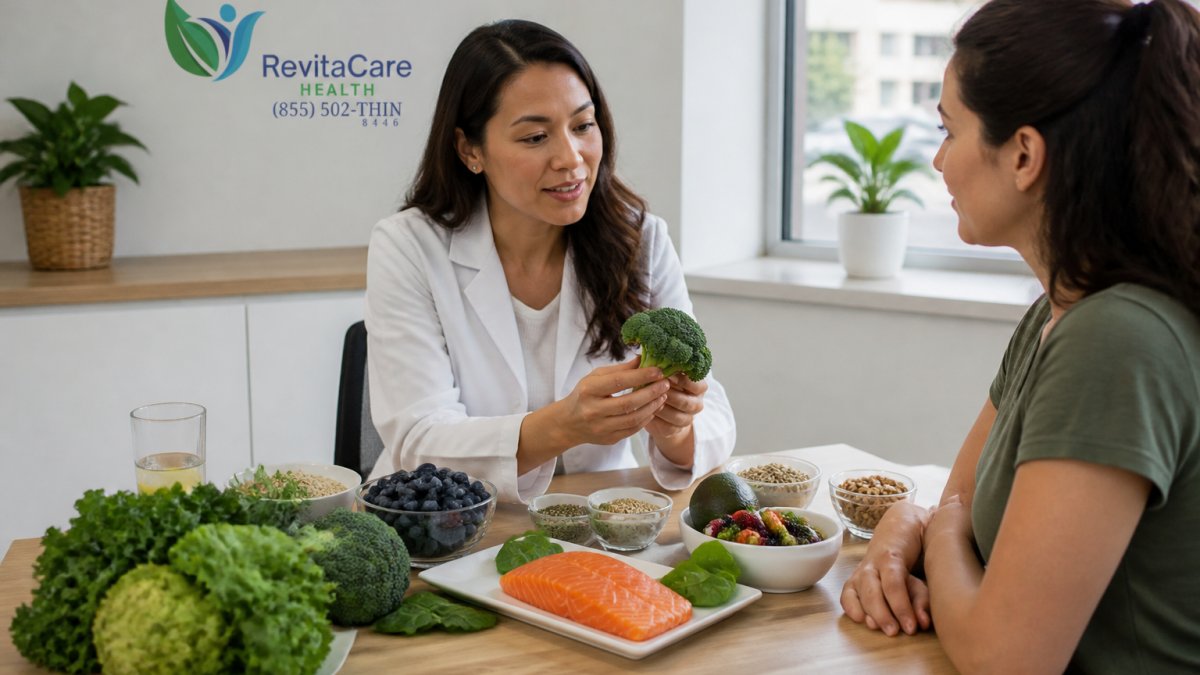
These foods are packed with polyphenols that calm inflammatory enzymes. Aim to fill half your plate with vegetables at lunch and dinner.
Oily fish and omega-3 fatty acids
Oily fish is one of the most researched anti-inflammatory foods. Salmon, mackerel, sardines, and herring contain EPA and DHA, which directly reduce inflammatory markers.
Omega-3s reduce inflammatory signaling, support healthy cell membranes, and promote natural anti-inflammatory responses.
Aim for two to three servings of oily fish per week. If you don't eat fish, walnuts, flaxseeds, and chia seeds provide plant-based omega-3s, though they're less potent than fish sources.
Whole grains and dietary fiber
Whole grains like oats, brown rice, and quinoa contain fiber that feeds beneficial gut bacteria, which produce compounds that reduce inflammation throughout your body.
The benefit comes from gut-supporting fiber, B vitamins that reduce inflammatory markers, and minerals like magnesium that calm inflammatory responses.
Swap refined grains for whole grain versions. Choose whole wheat bread, brown rice, and oatmeal over white bread and instant rice.
Nuts, seeds, and healthy fats
Nuts and seeds provide healthy fats that support anti-inflammatory responses. Almonds, walnuts, sunflower seeds, and pumpkin seeds are excellent choices.
Include these daily:
- A handful of mixed nuts as a snack
- Seeds sprinkled on salads or yogurt
- Olive oil drizzled on vegetables
Healthy fats help your body absorb fat-soluble vitamins and support cell function. They also keep you satisfied longer, which helps with weight management, extra weight, especially around the midsection, increases inflammatory markers.
Anti-Inflammatory Herbs and Spices to Use Daily
Fresh and dried herbs contain powerful anti-inflammatory compounds you can add to almost any meal.
Turmeric is the most studied anti-inflammatory spice. Its curcumin reduces inflammatory enzymes.
Garlic contains allicin, a compound released when you crush or chop it.
Ginger reduces inflammatory markers and supports digestion.
Cinnamon, oregano, and rosemary also contain anti-inflammatory compounds, use them liberally.
Anti-Inflammatory Lifestyle Habits That Matter
Food is just one piece. Your daily habits have an equally powerful effect on inflammation levels.
Exercise and physical activity
Movement reduces inflammatory markers in your bloodstream. You don't need intense workouts, consistent, moderate activity works best.
Effective anti-inflammatory activities include:
- Walking 30 minutes most days
- Swimming or water aerobics
- Yoga or gentle stretching
Consistency is key: three 30-minute sessions per week beat one intense workout.
Sleep quality and stress management
Sleeping less than seven hours increases inflammatory markers.
Improve sleep by:
- Going to bed at the same time each night
- Keeping your bedroom cool and dark
- Avoiding screens one hour before bed
Stress also triggers inflammation. Counter it with:
- Daily relaxation like meditation or deep breathing
- Time in nature
- Hobbies you enjoy
Even 10 minutes of daily stress relief reduces inflammatory markers.
Weight management and abdominal fat reduction
Excess weight, especially around the abdomen, increases inflammatory markers. Fat tissue produces inflammatory compounds, so reducing abdominal fat directly reduces inflammation.
You don't need extreme weight loss to see benefits. Even a 5-10% reduction in body weight decreases inflammatory markers significantly.
Combine anti-inflammatory foods with regular movement to address inflammation from multiple angles.
Supplements for Inflammation: What Works and What to Know
Supplements are the most overpromised corner of the anti-inflammatory market. Some have meaningful research behind them; many do not.
Before starting anything, talk to a qualified healthcare provider, especially if you take prescription medication, are pregnant or breastfeeding, have a diagnosed condition, or are scheduled for surgery. Supplements can interact with medications and are not appropriate for everyone.
How to read the evidence
A useful way to think about supplement evidence is in tiers:
- Stronger human evidence: omega-3 fish oil (EPA/DHA) for lowering triglycerides and supporting cardiovascular health; vitamin D when a blood test confirms low levels.
- Moderate but mixed evidence: curcumin from turmeric (poor absorption on its own; formulas with piperine or phospholipid delivery are studied more); ginger extract for nausea and some inflammatory markers.
- Weak or preliminary evidence: most proprietary blends, "anti-inflammatory" multivitamins, and single-ingredient powders marketed heavily online.
Effects in the research are usually modest, often smaller than what diet and activity changes produce, and isolated compounds underperform whole foods.
Safety notes that matter
- Omega-3 fish oil: can increase bleeding risk at high doses and may interact with blood thinners. Discuss dose with a clinician if you take anticoagulants or have surgery planned.
- Curcumin: may irritate the stomach and can interact with blood thinners and some diabetes medications. Absorption varies widely by formulation.
- Ginger: generally well tolerated but can have blood-thinning effects at high doses.
Quality and labeling
Quality varies enormously. Look for third-party testing seals (USP, NSF, or ConsumerLab), a clear list of active ingredients and amounts, and a manufacturer address. Avoid products making disease claims, a regulatory red flag, not a selling point.
Supplements are optional add-ons, not the foundation. If you eat oily fish twice a week, get regular movement, sleep seven to nine hours, and manage stress, you have already captured most of what the evidence supports. Add a supplement only after a conversation with a clinician.
Foods and Ingredients to Limit
Certain foods actively increase inflammation. Reducing these has an immediate effect.
Limit or avoid:
- Added sugar and sugary drinks
- Refined grains and white bread
- Processed foods with long ingredient lists
Added sugar is particularly inflammatory, and sugary drinks are the worst because the sugar enters your bloodstream rapidly. Processed foods often contain inflammatory oils and additives, read labels.
You don't need to eliminate these foods completely. Reducing them by 50-75% creates noticeable improvement in how you feel.
Eliminating all "bad" foods at once leads to failure. Most people can't maintain extreme restriction. Instead, make one swap this week. Next week, add another. This gradual approach is sustainable and actually works better long-term.
How to Measure and Monitor Inflammation Progress
Tracking progress is useful, but be clear about what you are measuring. Most of what you observe at home is a proxy for how you feel, not a direct readout of inflammation. Clinical markers exist but have limits, a single number rarely tells the whole story.
What you can track at home
Self-reported changes are the most practical signal for most people:
- Energy levels through the day
- Sleep quality and how rested you feel on waking
- Digestion and bloating
Keep a simple journal for four weeks, noting one or two of these daily on a 1-5 scale. Patterns matter more than any single day, a gradual upward trend across two to four weeks is more reliable than a good day after a bad night's sleep.
Clinical markers and their limits
If you want an objective measure, the most commonly ordered marker is C-reactive protein (CRP), along with a high-sensitivity version (hs-CRP) used in cardiovascular risk assessment. Other markers your clinician may consider include erythrocyte sedimentation rate (ESR) and, in specific contexts, interleukin-6 (IL-6).
What these markers can and cannot tell you:
- CRP rises with many things, infection, injury, autoimmune conditions, obesity, smoking, and even a recent hard workout. A high result does not by itself mean "chronic inflammation" in the lifestyle sense.
- A normal CRP does not rule out inflammation, low-grade inflammation can sit within the reference range.
- One result is a snapshot, not a trend. Clinicians usually interpret markers alongside symptoms, history, and repeat testing.
Do not self-diagnose from a single lab result or an at-home test kit. If a marker is abnormal, or if you have persistent symptoms such as unexplained fatigue, joint pain, recurring fevers, or unintended weight change, see a clinician for proper evaluation. Interpreting inflammatory markers is a clinical judgment, not a lookup table.
A realistic monitoring rhythm
- Weekly: review your journal and note one thing that improved and one that slipped.
- Monthly: check in on the habits you set, food, movement, sleep, stress, and adjust one variable at a time.
- Every few months, or as advised: if you and your clinician are tracking a marker, retest on a consistent schedule rather than chasing every fluctuation.
The most useful progress signal is a consistent habit plus how you feel over weeks, not a single lab value. Use clinical markers as one input among several, interpreted with a clinician, not as a scorecard you manage alone.
Building Your Personal Anti-Inflammatory Plan
Start with what's easiest. Don't try to change everything at once.
Week 1: Add one anti-inflammatory food daily
- Choose one: berries, leafy greens, or oily fish
- Eat it daily for the week
Week 2: Add movement
- Pick one activity you'll do three times this week
- Walking counts, you don't need a gym
Week 3: Improve sleep
- Pick one sleep improvement: earlier bedtime, no screens before bed, or a cooler bedroom
- Implement just that one change
Week 4: Add stress relief
- Choose one: 10 minutes of meditation, a walk in nature, or time with a hobby
- Do it daily
By week 5, you have four new habits. Each one reduces inflammation. Together, they create significant change.
Track how you feel, most people notice improved energy and better sleep within two to three weeks.
| Strategy | Timeline | Frequency | Impact |
|---|---|---|---|
| Add anti-inflammatory foods | Immediate | Daily | Reduces inflammatory markers |
| Start regular movement | 2-3 weeks | 3x per week | Improves energy and sleep |
| Improve sleep quality | 1-2 weeks | Nightly | Decreases inflammatory compounds |
| Add stress relief | Immediate | Daily | Reduces stress-triggered inflammation |
| Limit processed foods | Gradual | Ongoing | Removes inflammatory triggers |
Reducing inflammation naturally takes time, but the results are worth it. You'll feel better, have more energy, and notice physical changes.
At RevitaCare Health, we understand that many people have tried diet and exercise alone without seeing the results they want. Our personalized weight loss programs and non-invasive invisa-RED laser treatments work alongside these natural strategies to address stubborn inflammation and fat reduction that diet alone may not resolve.
Frequently Asked Questions
How long does it take for natural ways to reduce inflammation to show results?
Timeline varies by individual and inflammation severity. Most people notice changes in energy and comfort within 2-4 weeks of consistent dietary and lifestyle modifications. More significant reductions in inflammatory markers typically appear after 6-8 weeks. Consistency matters more than speed, sustainable changes build over time. Factors like sleep quality, stress levels, and exercise frequency accelerate results. If you're managing chronic inflammation, tracking your progress helps identify which strategies work best for your body.
What are the best supplements for inflammation, and are they safe to take?
Common supplements include omega-3 fish oil, curcumin (from turmeric), ginger extract, and green tea polyphenols. While generally recognized as safe for most adults, supplements can interact with medications or cause side effects in certain conditions. Quality varies significantly between brands. Before starting any supplement regimen, consult a healthcare provider, especially if you take blood thinners, have bleeding disorders, or are pregnant. Third-party tested supplements from reputable manufacturers offer greater reliability than unverified products.
Can anti-inflammatory herbs and spices actually reduce inflammation, or is this just marketing?
Research supports anti-inflammatory effects for several herbs and spices. Turmeric contains curcumin, which shows measurable anti-inflammatory activity in studies. Garlic, ginger, and cinnamon contain compounds that help reduce inflammatory markers. Green tea's EGCG polyphenols demonstrate antioxidant effects. However, the amounts in typical cooking are modest, you'd need concentrated extracts or supplements for stronger effects. Using these regularly as part of meals contributes to overall inflammation management, especially when combined with whole foods and lifestyle changes rather than relied upon alone.
What's the difference between acute inflammation and chronic inflammation, and does treatment differ?
Acute inflammation is your body's normal, protective response to injury or infection, it's temporary and resolves as healing occurs. Chronic inflammation persists long-term, often without obvious injury, and damages tissues over time. Acute inflammation needs rest and basic care; chronic inflammation requires sustained lifestyle changes. Natural approaches work best for chronic inflammation: dietary shifts, regular movement, stress reduction, and sleep optimization address root causes. If you're uncertain whether your inflammation is acute or chronic, a healthcare provider can clarify through assessment and, if needed, inflammatory marker testing.